
Technology
Monroe County deputies get a high-tech boost with new drone program
By Lila Thompson
Advertisement · Why this ad?
Tom Serrano is an experienced community journalist who earned his degree in Communications from SUNY Cortland. With over six years of reporting for various local media outlets, he is deeply committed to covering the diverse stories that define Ithaca’s neighborhoods.
More from Tom →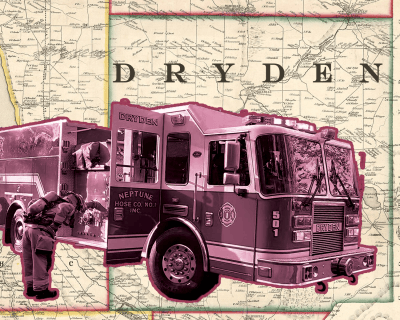
Residents of the Town of Dryden and the villages of Dryden and Freeville are bracing for a significant change in their fire service landscape, as the three municipalities approved the creation of a unified fire district. However, not all are on board with the move, with some calling for more information and a public vote before the change takes effect.
For years, fire protection in Dryden and Freeville has been managed through a somewhat fragmented system. Each municipality – the Town of Dryden, and the Villages of Dryden and Freeville – handled its own fire service funding and contracts with the various volunteer fire companies operating within their borders. This meant that Neptune Hose Company No. 1 of Dryden, the W.B. Strong Fire Company of Freeville, and the Varna Volunteer Fire Company each operated with varying degrees of autonomy, often competing for resources and facing inconsistent oversight. While volunteerism has long been a cornerstone of fire service in these communities, the evolving needs of a growing population and increasing complexity of emergency response demanded a closer look at how these services were delivered.
The idea of a unified fire district began to gain traction as a potential solution to these challenges. The working group, composed of representatives from each department, spent months analyzing the existing structure and exploring the potential benefits of consolidation. This process wasn’t without its initial hesitations and debates, as concerns about maintaining local identity and autonomy were raised. However, the group ultimately concluded that a unified district offered a more cohesive and efficient approach to fire protection.
The approval came after a joint public hearing on October 15, where a working group representing the three fire departments presented their proposal. The resolution to establish the district consolidates the business operations of Neptune Hose Company No. 1, W.B. Strong Fire Company, and Varna Volunteer Fire Company under a new governing body, with its own taxing authority. This move aims to enhance coordination and long-term planning while maintaining the individual identities and services of each department.
The district would cover the participating municipalities' fire protection areas, excluding the portion already served by the McLean Fire District. McLean’s existing district provides a model of regional fire service, and the exclusion reflects a deliberate decision to avoid overlap and maintain clear boundaries of responsibility.
Despite the initial support from officials like Dan Lamb, Deputy Town Supervisor of Dryden, and Tom Pirko, Chair of the Dryden Fire Board, the district remains subject to a 30-day permissive referendum period. This period allows residents to petition for a special election to bring the decision to a public vote. The referendum process is a crucial safeguard ensuring that the community has a voice in this significant change.
While officials believe the unified district will improve financial accountability, they acknowledge that its exact financial impact is still to be determined. The district's establishment, including the selection of commissioners and the development of policies and a budget, cannot formally begin until the district is established. The original goal was to have the district operating by the end of the year, but this timeline is now considered unrealistic.
“Of course town taxes will come down proportionately,” Lamb said. “We will not have to fund fire service out of the town budget anymore.” This shift represents a significant reallocation of resources within the town’s budget, which currently stands at $7 million. The $2 million currently allocated to fire protection represents a substantial portion of that budget, and its removal will free up funds for other municipal priorities.
Lamb also acknowledged that the district would likely require paid administrative support, rather than an extensive new bureaucracy. This is a key point of clarification, as some residents have expressed concerns about the creation of a large, costly administrative structure. The intention is to streamline operations and leverage technology to improve efficiency, minimizing the need for additional personnel.
Residents like John Bailey, a longtime Dryden resident organizing a petition for a permissive referendum, are calling for more information and an opportunity to vote. Bailey’s concerns echo those of many residents who feel that the communication surrounding the district’s creation has been inadequate. He suggested that municipalities could mail residents a concise explanation outlining the history of the idea, anticipated benefits, and potential financial implications. This would ensure that all residents have access to the information needed to make an informed decision.
“The overwhelming response is ‘[I] wasn’t aware of it, but I’d like to know more about it,’” Bailey said. “If you wanted information, you got to go to the hearings or you got to dive into minutes, and the electorate isn’t doing that these days.” He highlights a common challenge in local government: reaching all residents with important information, especially in an age of increasingly fragmented media consumption.
Lamb disputed the suggestion that the process lacked transparency, pointing to public meetings and other notices over several months. There were also two public hearings on the matter. However, he acknowledged the need for improved communication strategies in the future, recognizing that relying solely on traditional methods may not be sufficient to reach all segments of the community.
If the petition does not reach enough signatures to trigger a referendum, officials anticipate naming five fire commissioners in December, with the district expected to begin operating in February 2027. Initial commissioners would be appointed by the participating municipalities, with officials looking to the working group for potential candidates. This appointment process is crucial for ensuring that the new district is guided by individuals with a deep understanding of fire service and the needs of the community.
Residents would then be able to participate in an October 2027 budget hearing, followed by elections in December 2027 for all five seats. This transition period allows for a gradual shift in governance, ensuring that residents have a direct say in the district’s future direction. Terms would be staggered so that only one seat would come up for election each year, promoting continuity and stability.
“We are discussing ways, if possible, to try and make sure that each department is represented,” Pirko said. “[But] if the taxpayers choose to not have a representative from one of the departments, that’s really the taxpayer’s choice.” This emphasizes the importance of voter participation in the upcoming elections, as residents will have the opportunity to shape the composition of the fire commission.
If the referendum is triggered, the timeline could become more complex. Lamb expressed concern that a delay in moving forward could jeopardize the work already underway. He added that it could cost tens of thousands of dollars to conduct a referendum. The financial implications of a referendum highlight the importance of residents carefully considering the potential benefits and drawbacks of delaying the district’s implementation.
The creation of a unified fire district in Dryden is a significant step towards more efficient and coordinated fire services. While the financial benefits are clear, it's crucial that residents are fully informed before such a change is implemented. The transparency and communication from officials have been commendable, but there's still a need to ensure that every voice is heard. It's important for the community to come together and make an informed decision that aligns with their values and needs.
As this process moves forward, it's essential to maintain a balance between efficiency and representation. The community should continue to engage in meaningful dialogue, ensuring that the interests of all residents are considered. By doing so, we can build a stronger, more resilient community that is better equipped to face the challenges of the future.
By Lila Thompson

By Jordan Kim

By Nina Rodriguez

By Luis Martinez